
Nitrile foam gloves for assembly and craftsmanship
In many activities, the hands must remain protected and at the same time be able to grasp, feel and work precisely. Nitrile foam gloves combine a fine-knit textile backing with a foamed nitrile coating. Depending on the model, they offer a grippy surface and mobility for work in assembly, warehousing, logistics and crafts. Which design is suitable depends on the activity and the tested properties of the respective glove.
What makes nitrile foam gloves stand out?
In a nitrile foam coating, the coating contains fine pores. Its structure can support air circulation and offers a different feel than a closed nitrile coating.
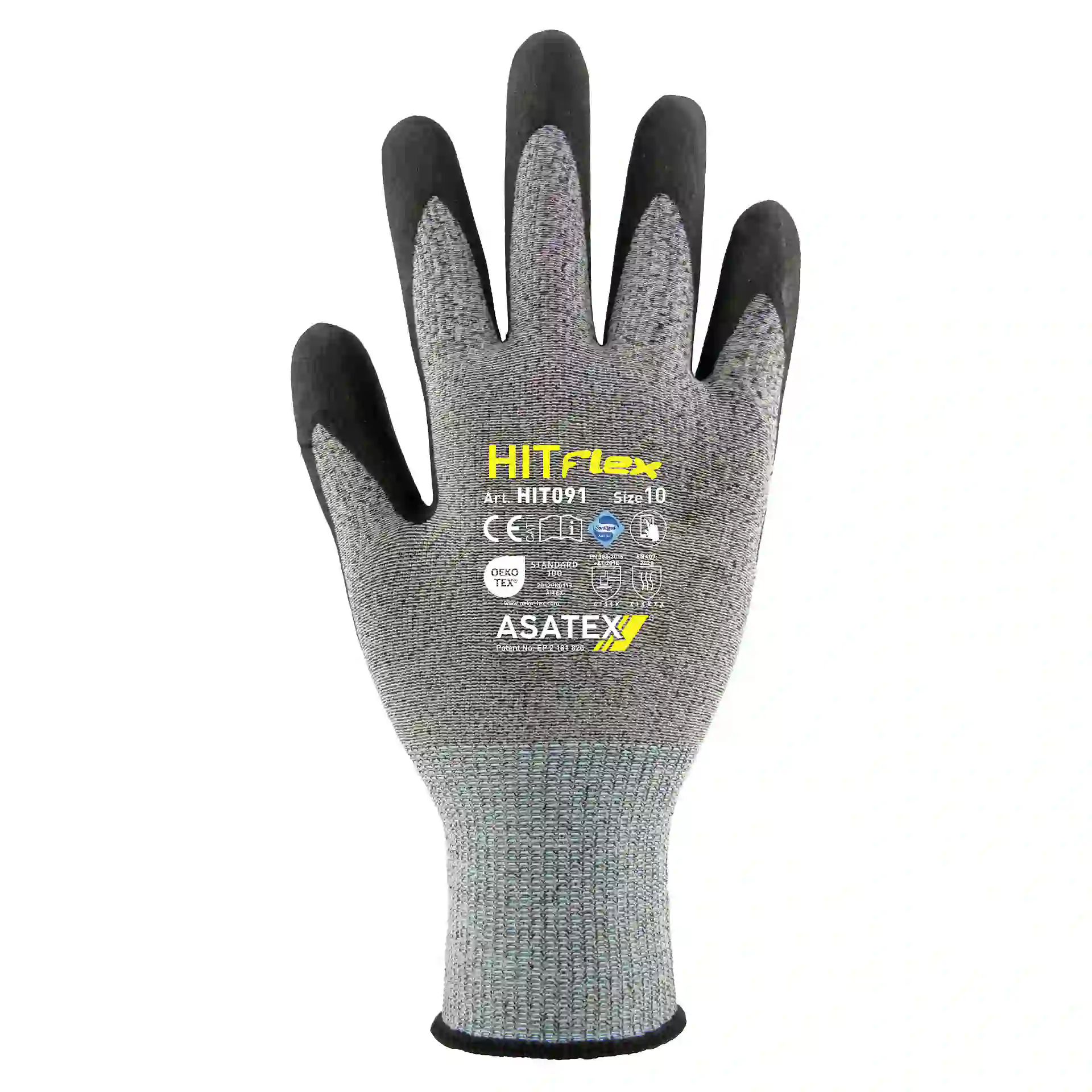
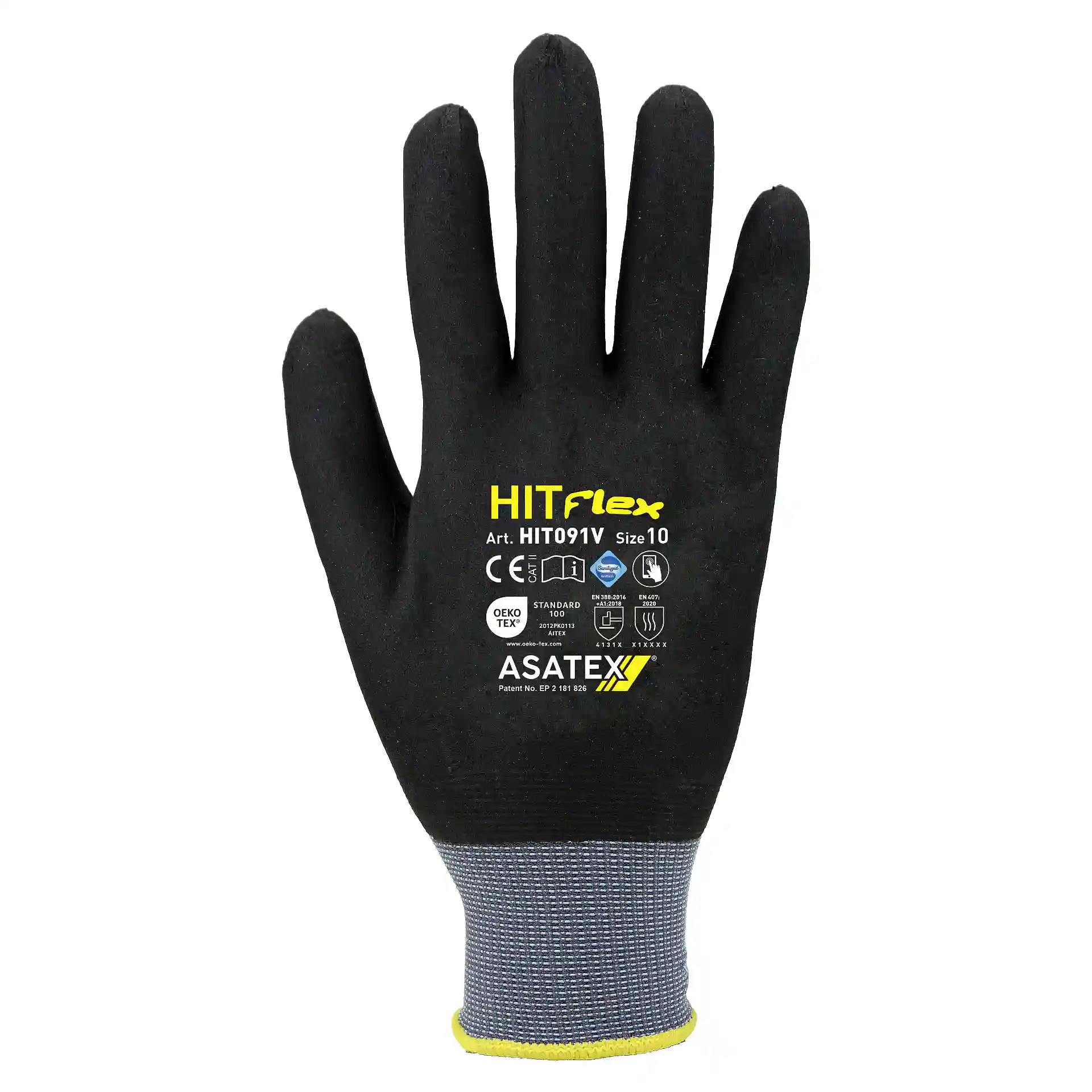
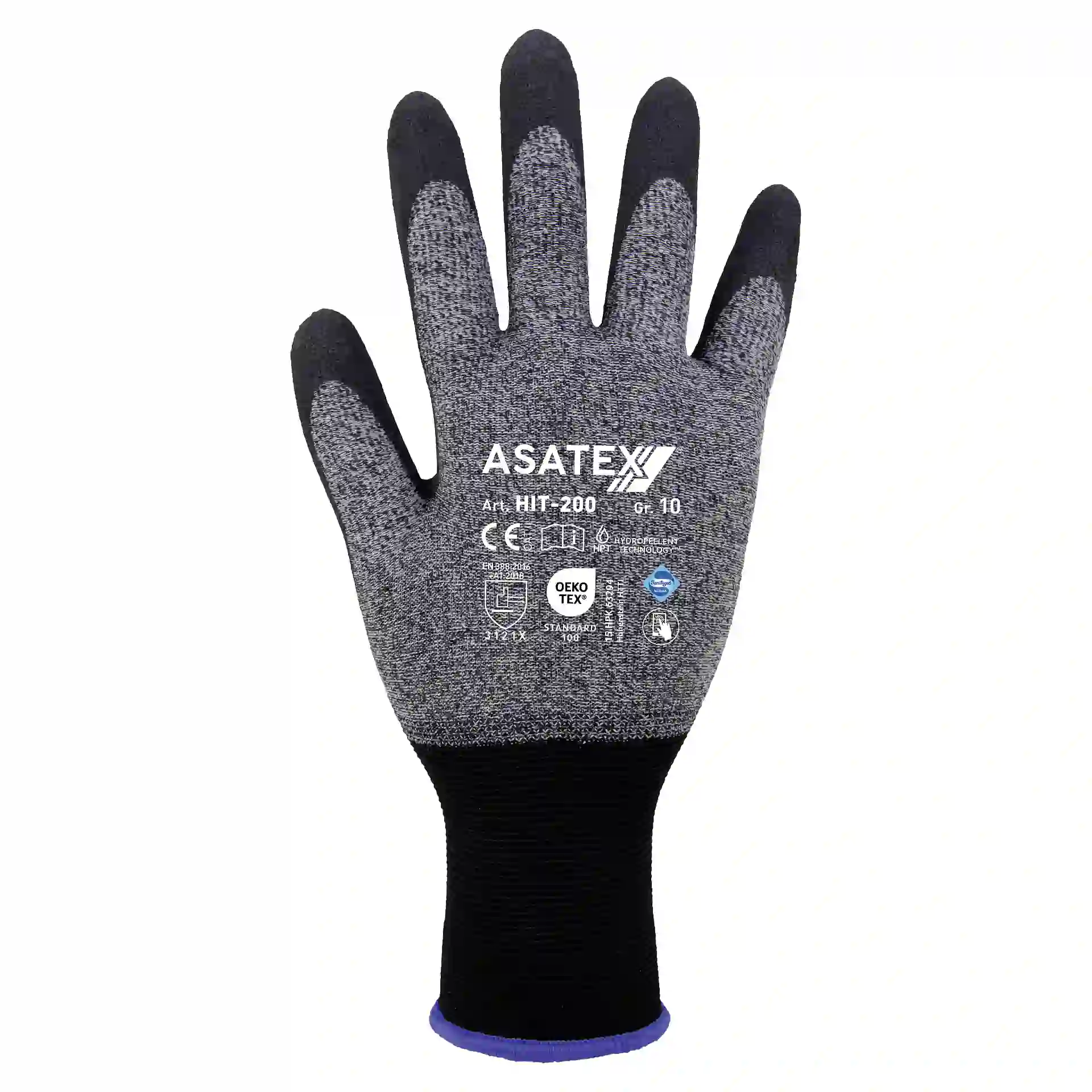
The gloves consist of a fine-knit textile backing with nitrile foam on the palm and, depending on the model, also on the fingertips or other surfaces. ASATEX offers versions with different knitting intricacies. Some models also have a touch function, point stopping, or tested contact heat protection. These characteristics apply only to the models specified accordingly.




Areas of application and selection
Nitrile foam gloves are suitable for assembly work, warehousing and logistics, as well as in the trades. They can be a suitable choice when requirements for grip, mobility, and tactile sensation are combined. For rough workpieces, the coating and mechanical performance values of the specific model must also be taken into account.
When selecting, pay attention to:
- Fit and tactile feel: Size, backing knit, and knit fineness influence fit and handling.
- Coating surface: A coating only on the palm and fingertips leaves the back of the hand free. Other variants can cover larger areas.
- Handle and surface structure: Sanded or studded versions can offer advantages depending on the workpiece and activity.
- Mechanical stress: Compare the specified EN-388 performance values with workplace requirements.
- Special Features: Check touch functionality or contact heat protection directly in the product data of the respective model.
Correctly classifying norms
EN ISO 21420 describes general requirements for protective gloves, such as ergonomics, harmlessness, marking and user information. EN 388 specifies tested performance values against certain mechanical risks. For individual gloves with thermal properties, a test according to EN 407 may also be specified. The actual protective performance of a model is shown by its labeling and product information. The standard specification alone does not prove suitability for every activity.
FAQ
-
What is the difference between nitrile foam and a closed nitrile coating?
Nitrile foam has a porous coating structure. It can support air circulation. Features such as handle, feel, and protection vary depending on the model and coating.
-
Are nitrile foam gloves acid-resistant?
This cannot be derived solely from the nitrile foam coating. Check the product information for the specific substance and the intended activity.
-
Can I use nitrile foam gloves to operate a smartphone or scanner?
Some models have a touch function. Whether the respective device can be operated with it depends on the glove model and the display.
-
What does dot topping mean?
There are additional bumps on the palm of the hand. They change the surface structure and can support the handle depending on the workpiece. The specific details can be found in the product information.