EN ISO 11612: Changes to heat protection
What does the EN ISO 11612 standard actually mean?
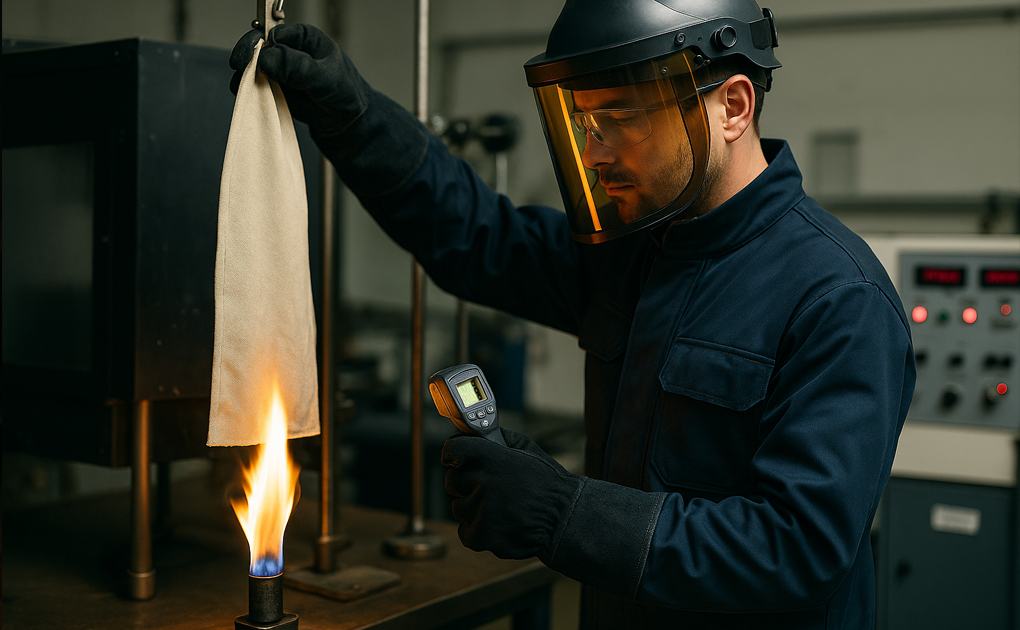
EN ISO 11612 is the most important standard for protective clothing against heat and flames. It specifies how garments must withstand thermal risks such as flame contact, radiant heat, heat exposure and contact heat. The standard is relevant for all industries in which employees are exposed to direct or indirect heat – for example, in foundries, metal processing, the chemical industry, welding or plant engineering.
Important: This standard differs from EN ISO 11611, which was developed specifically for welders. EN 11612 covers a broader spectrum of thermal stresses and can therefore be used universally in industry.
Why the amendment to EN ISO 11612 is relevant now
When hot vapours suddenly escape during the repair of a chemical container, or extreme heat and isolated metal splashes occur during casting, protective clothing can make the difference between life and death in a matter of seconds. This is precisely where EN ISO 11612 comes in: it specifies requirements for protective clothing against heat and flames.
A documented case study shows that an incident occurred in an industrial park while replacing a valve. The worker was wearing flame-retardant clothing that was certified for convective heat, but the radiant heat generated was not adequately absorbed. The result: severe burns to the arms and neck. The case shows how crucial it is to choose the right type of heat protection.
The standard is crucial for all industries where thermal risks exist – such as foundries, welding, the chemical industry and plant engineering. A draft revision has been available since the end of 2023. The final version is expected this year. Nevertheless, the change is already relevant: those responsible must make procurement decisions today in such a way that they are still compliant with standards and future-proof tomorrow.
What will change in EN ISO 11612?
Key changes:
- Better differentiation between types of heat: convection heat, radiant heat, contact heat
- Clearer requirements for the behaviour of materials when in contact with flames
- New test criteria for greater practical relevance
- Transparent labelling of protective effects (e.g. using pictograms or standard codes)
These adjustments help to evaluate protective performance in a more differentiated manner and to select products more specifically for certain hazards. Those who know exactly what the standard requires can manage risk much better.

What does this mean for procurement and occupational safety?
Safety officers and purchasers face the challenge of selecting products that will still comply with standards in three years' time. The following points will help:
- Plan in accordance with standards and for the long term: look for clothing with multi-standard certification and robust material values
- Document your selection and risk assessment in a comprehensible manner
- Actively obtain information from the manufacturer – ideally with ATPV values or documented practical tests
Close cooperation with PPE manufacturers and their development departments is a clear advantage in this regard.
Practical example: ASATEX protection system
A proven multi-standard system in the field of heat protection is the combination of:
Both are certified according to EN ISO 11612:2025 and other protective standards (e.g. EN 1149-5, EN ISO 20471, EN 13034) and thus offer a high level of safety and functionality. Particularly suitable for areas of application with simultaneous exposure to heat, flames, chemical splashes and poor visibility.
ASATEX offers a wide range of multi-standard solutions that combine protection against heat, flames, chemicals and other hazards. For further specific recommendations, we recommend contacting our sales department directly to ensure that the PPE you choose will continue to meet future requirements in the medium term.
Conclusion: Prepare now – rather than risk it later
Anyone purchasing PPE today is helping to determine safety standards for the coming years. EN ISO 11612 provides the normative framework for this – but only the correct handling of standards, materials and selection processes can guarantee genuine protection. Anyone with questions should seek advice from the manufacturer at an early stage – for greater clarity, safety and responsibility in heat-exposed fields of application.
5 frequently asked questions about EN ISO 11612 (FAQ)
1. What risks does EN ISO 11612 cover?
It protects against flame contact, heat exposure from radiation, contact or convection, and short-term flame spread.
2. Which industries are particularly affected by the standard?
Typical areas of application are foundries, steelworks, refineries, energy supply, plant engineering and the chemical industry.
3. How does EN ISO 11612 differ from EN ISO 11611?
11612 is general heat protection. 11611 is specifically aimed at welders – with requirements for weld beads, electric arcs and welding gas.
4. Do I have to replace existing clothes?
No, existing clothing remains permitted. However, new purchases should be prepared for upcoming standard requirements.
5. Where can I find the current draft of the standard?
From DIN e.V. or via specialist media such as sifa-sibe.de