
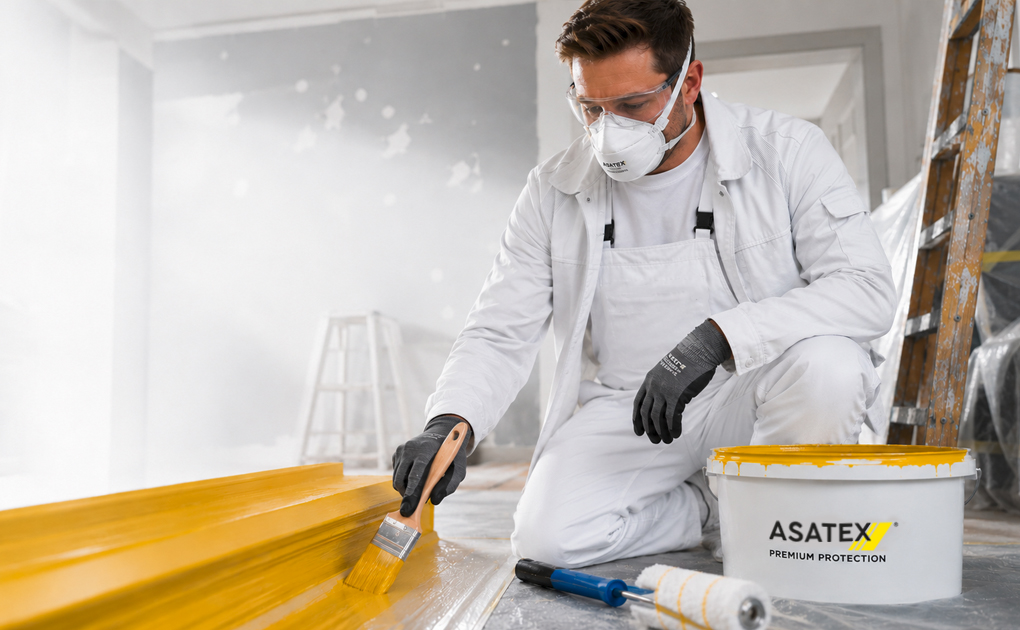
Personal Protective Equipment (PPE) in the painting trade: safety, protection and professionalism in everyday work
Visibly clean, noticeably protected – in the painting and decorating trade, professionalism is reflected not only in the final result, but also in the preparation.
Anyone working daily with paints, dust and solvents is exposed to invisible risks. Personal protective equipment (PPE) helps ensure that routine tasks do not become a safety hazard.
Many risks in the painting trade are well known – yet they are often underestimated in everyday work. Because tasks such as sanding, painting or cleaning are performed daily, protective measures are frequently neglected. However, these risks do not arise suddenly, but develop continuously throughout the working day.
Why PPE is essential in the painting and decorating trade
Whether painting, sanding or cleaning – professionals are regularly exposed to fine dust, paint mist and solvents. In addition, there are physical strains and risks associated with working on ladders and scaffolding.
Typical hazards in the painting trade:
- Fine dust and spray mist
- Skin contact with paints and chemicals
- Fumes and solvents
- Fall risks when working at height
- Mechanical strain during daily work
The right personal protective equipment (PPE) reliably protects against these hazards while also improving comfort, efficiency and a professional appearance when working with customers.
Protective functions of modern PPE
Modern PPE not only protects against acute injuries, but also plays an important role in reducing long-term health risks.
- Respiratory protection filters dust, particles and fumes
- Protective coveralls reduce skin contact with paints or chemicals
- Safety goggles protect against splashes and fine particles
- Ergonomic designs improve comfort and freedom of movement
- Workwear protects personal clothing and reduces wear and tear
Disposable protective coveralls also reduce cleaning effort and help keep workwear cleaner for longer – a clear advantage in everyday use.
Uniform workwear with a company logo additionally strengthens a company’s professional appearance – especially in direct customer contact.
Which standards apply to PPE in the painting trade?
Personal protective equipment should comply with the applicable European standards. These standards ensure that protective clothing and equipment have been tested for their intended level of protection.
Key standards at a glance:
- EN ISO 13688: General requirements for protective clothing
- EN 149: Respiratory protective masks (FFP1–FFP3)
- EN 166: Safety goggles and eye protection
- EN 12941: Powered air respiratory systems with TH3 protection class
- EN 13034 Type 6: Protection against light chemical splashes and spray mist
These standards help companies select PPE according to the specific application and implement protective measures professionally.
Workwear for painters: functional and professional
White workwear has traditionally stood for cleanliness, precision and a professional appearance in the painting and decorating trade.
Recommended basic equipment
- Painter’s bib trousers HLH00: robust, functional and comfortable for daily use
- Work jacket HJA00: breathable, durable and designed for freedom of movement
- Corn blue work jacket HJA02: ideal for heavily soiled work and surface preparation
- ASATEX DA7525JA08P: for special requirements such as flame or antistatic protection
Disposable protective coveralls for dusty and paint-intensive work
Disposable protective coveralls are a practical addition for sanding work or spray painting applications. They help protect clothing and skin from dust, paint particles and fine spray mist.
Typical applications and products
- CoverFlash CF4: ideal for spray painting and fine paint mist
- CoverFlash CF5: suitable for dust-intensive renovation and sanding work
- CoverStar CS500: antistatic, with hood and zipper
- CS500E: cost-effective solution for short-term tasks
Disposable PPE is hygienic, quick to use and helps reduce cleaning time.
When working with hazardous substances, dust or solvent-based materials, the Technical Rules for Hazardous Substances (TRGS) should also be taken into account. They support risk assessment processes and help companies select suitable protective measures and PPE.
Which PPE for which task?
| Task | Recommended PPE | Standards | Example products |
|---|---|---|---|
| Sanding | Disposable coverall, FFP3 mask, safety goggles | EN 149, EN 166 | CF5, SMS-1, CS500, HIT200 |
| Painting | Coverall, gloves, safety goggles and, depending on the material, respiratory protection with particle or gas filter | EN 13034, EN 166 | CF4, CS500E, 03400V |
| Facade work | Robust workwear and grippy gloves | EN ISO 13688 | HJA02, HLH00, HIT300 |
| Interior work | Lightweight workwear and FFP2 mask | EN 149 | HJA00 |
| Special applications | Multinorm protective clothing | EN ISO 11612, EN 1149 | DA7525JA08P |
Suitable gloves and respiratory protection for everyday painting work
In addition to protective clothing, hand protection and respiratory protection are essential for safety in the painting and decorating trade.
The right gloves
- Nitrile gloves: suitable for painting work and handling many chemicals
- HIT200 fine knit gloves: high wearing comfort and excellent tactile sensitivity for sanding and preparation work
- HIT300 with nitrile wave coating: particularly good grip and additionally touchscreen compatible
Important: Gloves should always be selected according to the specific task.
Do not forget skin protection
Paints, solvents and cleaning agents can place continuous strain on the skin during daily painting work. In addition to gloves, skin protection, skin cleansing and skin care products help reduce skin irritation and long-term skin damage.
Respiratory protection: protection against dust, paint mist and fumes
Sanding, painting and cleaning work can generate harmful particles, dust and fumes. Suitable respiratory protection is therefore an important part of modern PPE in the painting and decorating trade.
- FFP2 masks: for light to medium exposure levels (FFP2 NR D SMP2S)
- FFP3 masks: for high dust exposure and fine particles (FFP3 NR D SMP3S)
- Respiratory protection with gas filter: for solvent-based paints and coatings
- Masks with exhalation valve: improve comfort during longer periods of use
Important: Respiratory protection should always be worn whenever dust, paint mist or fumes are generated.
Typical PPE mistakes in the painting and decorating trade
In everyday work, avoidable mistakes are often made when using personal protective equipment:
- Respiratory protection is worn too late or not at all
- Disposable protective coveralls are used multiple times
- Gloves are not suitable for the chemicals being used
- Safety goggles are missing during spray painting or sanding work
A common reason is routine: tasks performed every day often seem harmless. However, this is exactly where the greatest risks arise.
FAQ – Frequently asked questions about PPE in the painting and decorating trade
What PPE does a painter need?
Respiratory protection, safety goggles, gloves, workwear or disposable protective coveralls, as well as slip-resistant safety footwear.
When is respiratory protection necessary?
Whenever dust, paint mist or fumes are generated – for example during sanding, painting or cleaning work.
Which gloves are suitable for painting work?
Nitrile gloves are particularly suitable because they are resistant to many chemicals while still providing good tactile sensitivity.
How often should PPE be replaced?
Disposable PPE should be disposed of after use. Reusable clothing and equipment should be inspected regularly and damaged products replaced immediately.
Which standards apply to PPE in the painting and decorating trade?
Important standards include EN ISO 13688, EN 149, EN 166, EN 12941 and EN 13034 Type 6.
Conclusion: safety pays off
Personal protective equipment not only protects the health of employees, but also improves efficiency, comfort and professionalism in everyday work. It helps reduce downtime, supports clean working processes and strengthens customer confidence.
Not sure which PPE is right for your business?
We provide practical and individual advice tailored to your requirements.